Chronicles: Medieval Promises Deep Feudal System with Vassals, Intrigue, and Power Struggles
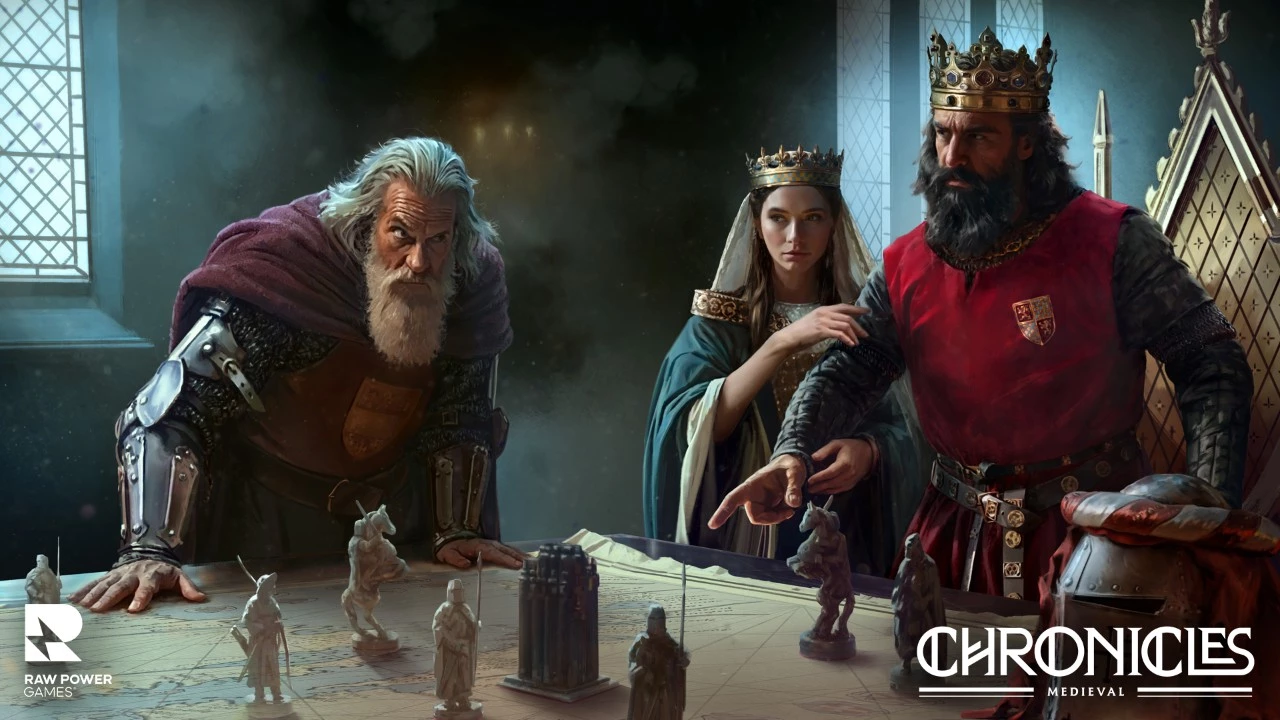
Raw Power Games has released a new developer diary for Chronicles: Medieval, revealing the ambitious scope of their political simulation systems. The cooperative RPG sandbox is taking a bold approach to medieval gameplay by eschewing traditional faction mechanics in favor of an intricate feudal hierarchy that mirrors the complex power dynamics of 14th-century Europe. According to the developers, players won’t simply choose a team or allegiance — they’ll navigate a web of titles, vassalage, and territorial claims that could make or break their path to power.
The studio’s latest update demonstrates how deeply they intend to recreate the political landscape of medieval society. Rather than implementing simplified alliance systems common in strategy games, Chronicles: Medieval will feature a comprehensive title system where players can hold positions ranging from minor barons to powerful dukes. Each title carries specific rights, responsibilities, and most importantly, relationships with other nobles in the hierarchy. A count owes allegiance to a duke, who in turn serves a king — and each link in this chain creates opportunities for both cooperation and betrayal.
The feudal system being developed draws heavily from historical European practices that dominated the continent for centuries. In real medieval society, feudalism was far more than a political arrangement — it was the fundamental organizing principle of civilization. Lords granted land to vassals in exchange for military service and loyalty, creating interconnected networks of obligation that could span entire kingdoms. This system emerged following the collapse of centralized Roman authority and reached its peak during the High Middle Ages, roughly from the 11th to 13th centuries. Chronicles: Medieval appears to be capturing this complexity, where a player’s success depends not just on military might but on managing relationships up and down the feudal ladder.
What sets this approach apart from competitors is the emphasis on emergent gameplay through political mechanics. The developers have indicated that internal conflicts — the deadly feuds between nobles that characterized medieval politics — will be a core feature rather than a scripted event. Historical records show that medieval Europe was constantly wracked by such struggles: the Wars of the Roses in England, the Burgundian conflicts in France, and countless succession crises that reshaped borders and dynasties. In Chronicles: Medieval, players can expect similar dynamics to unfold organically as ambitious vassals scheme for greater power while their overlords struggle to maintain control.
The cooperative nature of the game adds another layer of intrigue to these systems. While many medieval strategy games are single-player experiences or competitive multiplayer affairs, Chronicles: Medieval allows groups of players to work together within the feudal framework. This raises fascinating possibilities: will player alliances remain stable when one friend holds a title coveted by another? The developers seem to be banking on the drama that emerges when trust and ambition collide. Historical feudal relationships were notoriously unstable, with vassals frequently rebelling against their lords when circumstances seemed favorable — a dynamic that should translate powerfully to multiplayer interactions.
The sandbox elements of the game promise to give these political systems room to breathe and evolve. Unlike linear campaigns with predetermined outcomes, Chronicles: Medieval appears designed to let players write their own histories. The 14th century setting is particularly ripe for such storytelling, as this era witnessed some of history’s most dramatic upheavals: the beginning of the Hundred Years’ War, the devastation of the Black Death, and the gradual weakening of traditional feudal bonds that would eventually give rise to centralized nation-states. Players navigating this turbulent period will have ample opportunity to exploit chaos or restore order according to their ambitions.
Raw Power Games has not yet announced a release date for Chronicles: Medieval, but the detailed developer diaries suggest the project is progressing steadily. For fans of medieval history and complex political gameplay, the studio’s commitment to authentic feudal mechanics represents a refreshing departure from simplified faction systems. If the team can deliver on their ambitious vision, Chronicles: Medieval could offer one of the most nuanced portrayals of medieval power dynamics ever seen in gaming — a world where your title matters, your vassals scheme, and every alliance carries the seeds of future conflict.