Hearts of Iron IV: Thunder at our Gates Review – Expanding the War Horizontally Rather Than Vertically
The global strategy game Hearts of Iron IV continues to evolve with its latest expansion, Thunder at our Gates, which shifts the spotlight to the often-overlooked Pacific Theater and Southeast Asian front of World War II. Developed by Paradox Development Studios, this downloadable content represents a significant departure from previous expansions by focusing on geographical breadth rather than mechanical depth, offering players an entirely new perspective on the deadliest conflict in human history.
Hearts of Iron IV, originally released in 2016, has established itself as one of the premier grand strategy games depicting World War II. Over the years, Paradox has released numerous expansions focusing on various aspects of the war, from the Eastern Front’s brutal campaigns to the political intrigues of neutral nations. However, the Pacific Theater—where the United States, Japan, China, and numerous colonial powers clashed across vast oceanic expanses—has long been considered underrepresented in the base game’s content.
Thunder at our Gates addresses this imbalance by introducing comprehensive focus trees, new mechanics, and historical events specifically tailored to the nations that fought in this theater. Japan, the primary aggressor in the Pacific, receives substantial attention with expanded options for its military expansion into China, Southeast Asia, and the Pacific Islands. Players can now experience the complex decision-making that led to Pearl Harbor, the conquest of the Philippines, and the establishment of the Greater East Asia Co-Prosperity Sphere with unprecedented detail and historical accuracy.
The expansion also breathes new life into the nations of Southeast Asia, many of which were colonial possessions during the war. Countries like the Dutch East Indies (modern-day Indonesia), French Indochina, British Malaya, and the Philippines now feature unique content that allows players to explore alternative historical paths. What if these nations had achieved independence before the Japanese invasion? Could a unified Southeast Asian alliance have resisted imperial aggression? These questions can now be explored through the game’s signature alt-history mechanics.
China, which suffered immensely during the Second Sino-Japanese War that began in 1937, receives particular attention in this expansion. The Chinese theater saw some of the war’s bloodiest fighting, with estimates suggesting between 15 and 20 million Chinese civilians died during the conflict. Thunder at our Gates introduces new mechanics reflecting the fractured nature of Chinese resistance, including the uneasy alliance between Chiang Kai-shek’s Nationalists and Mao Zedong’s Communists. Players must navigate internal political tensions while simultaneously resisting Japanese aggression—a balancing act that mirrors the historical challenges faced by Chinese leadership.
From a gameplay perspective, the expansion introduces naval and logistics mechanics specifically designed for Pacific warfare. The vast distances between islands and the critical importance of naval supremacy defined the Pacific campaign, and Thunder at our Gates attempts to capture this through new supply chain mechanics and amphibious assault improvements. Island-hopping strategies, which proved decisive in the American advance toward Japan, become more viable and historically authentic. The addition of new unit types, including specialized marine divisions and carrier aircraft, further enhances the Pacific experience.
Critics and players have noted that while Thunder at our Gates excels at horizontal expansion—adding new regions, nations, and historical content—it does less to address some of the base game’s underlying mechanical issues. Veterans of Hearts of Iron IV have long requested improvements to AI behavior, peace conference mechanics, and late-game performance. This expansion largely sidesteps these concerns, focusing instead on content creation rather than systemic overhaul. Whether this approach satisfies the community remains a matter of individual preference and expectations.
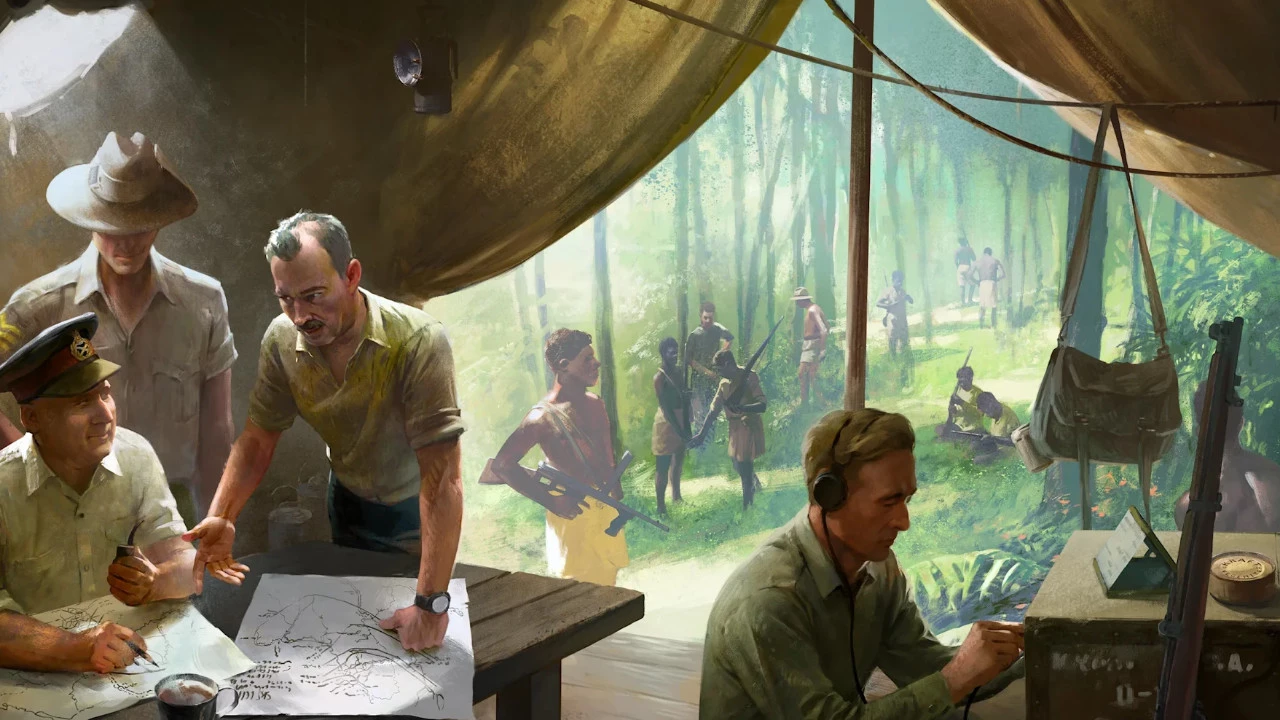
Nevertheless, Thunder at our Gates represents a significant addition to the Hearts of Iron IV experience, particularly for players interested in the Pacific Theater’s unique strategic challenges. The expansion serves as a reminder that World War II was truly a global conflict, with decisive battles fought from the frozen steppes of Russia to the tropical jungles of Burma and the coral atolls of the Central Pacific. For strategy enthusiasts seeking to understand and simulate this complex period of history, Thunder at our Gates offers valuable new perspectives on a war that shaped the modern world.