AI Steps Into the Spotlight: Sergey Orlovsky Announces Strategy Game Salt and Soil, Developed with Artificial Intelligence
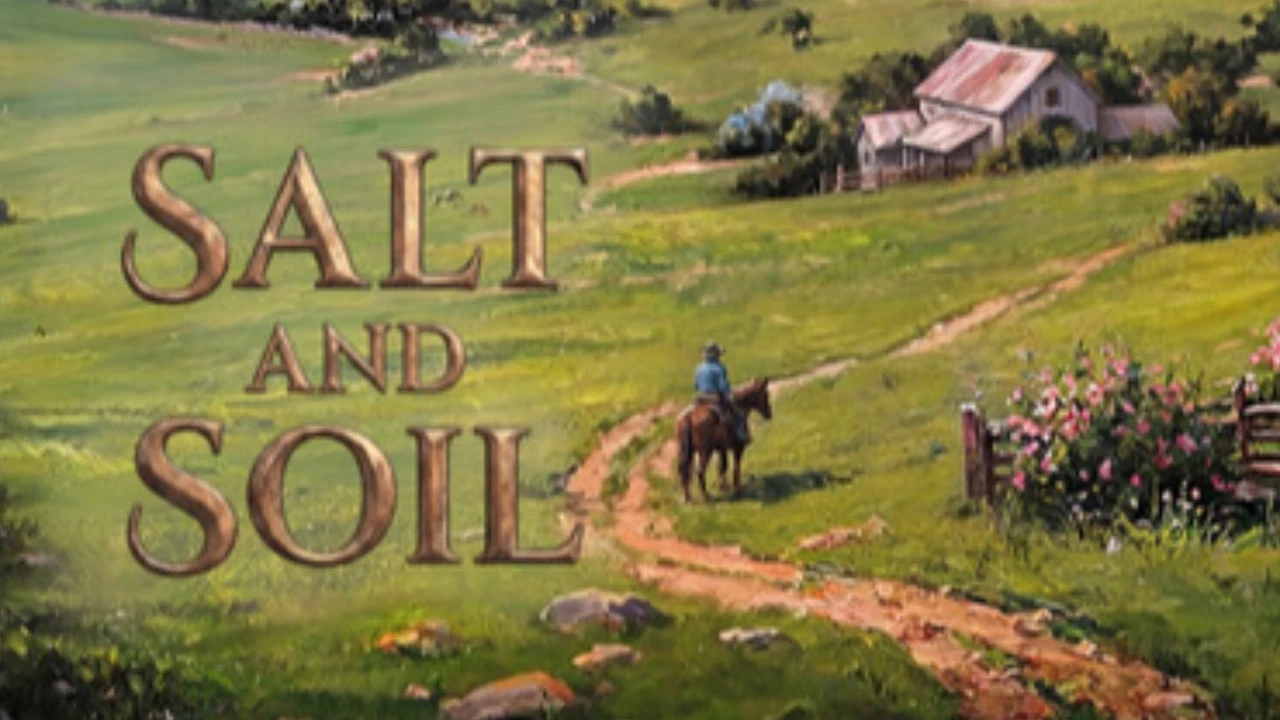
The gaming industry is witnessing a paradigm shift as veteran game developer Sergey Orlovsky publicly announces Salt and Soil, a family colony simulator being created with significant assistance from artificial intelligence. What makes this announcement particularly noteworthy is not just the use of AI in development, but the developer’s decision to be completely transparent about it — a move that challenges the industry’s tendency to downplay or hide AI involvement in game creation.
Orlovsky, known in the gaming community for his previous work and entrepreneurial ventures in the Russian game development scene, has revealed that Salt and Soil is being developed by a single person over a span of just six months. This timeline would be virtually impossible using traditional development methods for a strategy game of this scope. The announcement signals a new era where solo developers can potentially compete with larger studios by leveraging AI tools throughout the entire development pipeline.
What sets Salt and Soil apart from other projects is the dual implementation of artificial intelligence — it’s not only being used as a development tool but will also be integrated into the gameplay experience itself. Players will interact with AI systems during their playthrough, suggesting a dynamic and potentially more responsive game world. This approach represents a significant evolution from traditional strategy games where NPC behavior follows predetermined scripts and algorithms.
The transparency surrounding AI usage in Salt and Soil comes at a crucial time for the gaming industry. Over the past two years, the debate around artificial intelligence in creative fields has intensified considerably. Many studios have faced backlash for using AI-generated content without disclosure, while others have quietly incorporated these tools into their workflows without public acknowledgment. Orlovsky’s open approach could establish a new standard for how developers communicate about their creative processes and the tools they employ.
The family colony simulation genre has seen steady growth in recent years, with games like RimWorld, Dwarf Fortress, and Going Medieval attracting dedicated player bases who appreciate deep management mechanics and emergent storytelling. Salt and Soil appears to be positioning itself within this niche, promising the colony management elements that fans of the genre expect while potentially offering new innovations through its AI integration. The combination of family dynamics with survival and colony building suggests gameplay that emphasizes personal connections between colonists rather than treating them as interchangeable resources.
Industry analysts have noted that AI-assisted game development could democratize the creation process, allowing smaller teams and individual developers to produce content that previously required substantial resources. However, this shift also raises questions about the future of employment in the gaming sector and the nature of creative authorship. Some argue that AI tools are simply the next evolution of development software, similar to how game engines like Unity and Unreal democratized development in previous decades. Others express concerns about the potential homogenization of creative output when many developers rely on similar AI systems.
The six-month development timeline mentioned by Orlovsky represents a dramatic compression of traditional game development schedules. AAA strategy games typically require teams of dozens or even hundreds of developers working for three to five years. Even successful indie titles in the genre often take two to three years to complete. If Salt and Soil delivers a polished experience within its stated timeline, it could serve as proof of concept for AI-accelerated development and potentially reshape investor and publisher expectations for development cycles.
As the gaming community awaits more details about Salt and Soil, the announcement has already sparked discussions about transparency, creativity, and the evolving relationship between human developers and artificial intelligence. Whether Orlovsky’s approach becomes a template for future announcements or remains an outlier depends largely on how players respond to both the finished product and the honesty surrounding its creation. What remains clear is that AI in game development is moving from behind-the-scenes tool to front-page feature, and the industry will need to adapt its conversations accordingly.