Going Medieval Update Addresses One of the Most Frustrating Gameplay Issues
Foxy Voxel, the development team behind the popular medieval colony simulation game Going Medieval, is preparing to release a significant update that aims to overhaul the settler behavior system. This highly anticipated patch promises to dramatically improve the efficiency of construction, resource gathering, and structure demolition processes that have long frustrated players. After extensive testing on the experimental branch, the update is now being rolled out to the main client, marking a substantial quality-of-life improvement for the game’s dedicated community.
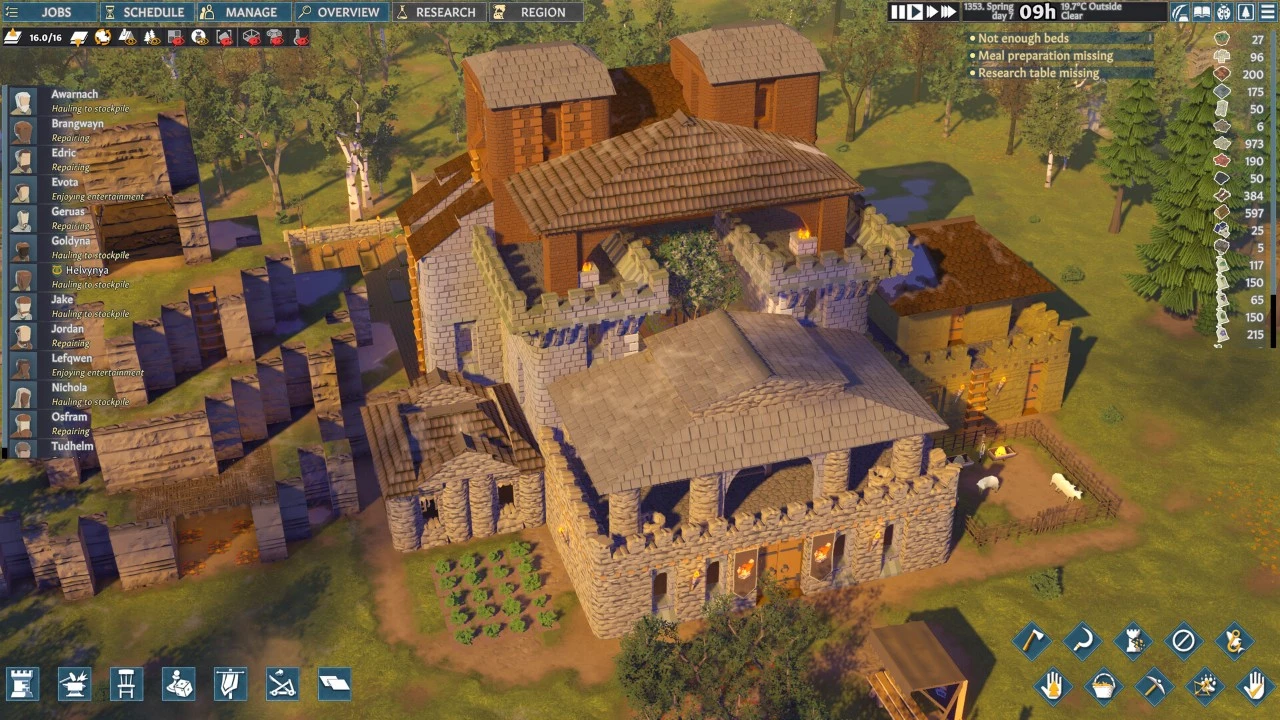
Going Medieval, which entered Early Access in June 2021, has steadily built a loyal following among fans of colony management and survival games. The title draws inspiration from genre giants like RimWorld and Dwarf Fortress, challenging players to guide a group of survivors in rebuilding civilization after a devastating plague has wiped out most of the population in an alternate 14th-century Europe. Players must manage resources, construct elaborate multi-story fortifications, and ensure their settlers survive against raids, harsh weather, and the various challenges of medieval life.
One of the most persistent complaints from the player base has centered around the AI pathfinding and task prioritization of settlers. In complex building projects, settlers would often abandon tasks mid-completion, fail to efficiently coordinate their efforts, or create bottlenecks that brought construction to a frustrating halt. Mining operations suffered similar issues, with workers sometimes ignoring accessible resources or taking unnecessarily long routes to complete simple tasks. These problems became particularly pronounced in larger settlements where dozens of construction and gathering orders competed for settler attention.
The upcoming patch addresses these core issues by implementing a more sophisticated decision-making algorithm for settler behavior. According to early reports from players who tested the experimental branch, settlers now demonstrate noticeably improved judgment when selecting which tasks to prioritize and how to approach complex building projects. The demolition system has also received attention, with settlers now more reliably completing tear-down orders without leaving partially demolished structures scattered across the settlement.
Colony simulation games have experienced a renaissance in recent years, with titles like RimWorld, Dwarf Fortress, and Oxygen Not Included drawing millions of players who enjoy the intricate management challenges these games provide. However, AI behavior has consistently remained one of the most technically challenging aspects for developers to perfect. The complexity of simulating autonomous decision-making for multiple characters who must coordinate on shared projects while also attending to individual needs creates numerous opportunities for frustrating edge cases and unexpected behavior patterns.
Going Medieval distinguishes itself from competitors through its focus on three-dimensional construction, allowing players to build elaborate multi-story structures with detailed room layouts, defensive walls, and underground chambers. This vertical building system adds an additional layer of complexity to settler pathfinding and task management, as workers must navigate stairs, ladders, and scaffolding to reach construction sites. The challenges of coordinating work across multiple building levels likely contributed to some of the behavioral issues this update seeks to resolve.
Foxy Voxel has maintained consistent communication with their player community throughout the Early Access period, regularly releasing updates that address both bug fixes and feature requests. The studio’s willingness to tackle fundamental gameplay systems demonstrates their commitment to delivering a polished final product. As Going Medieval continues its development journey toward a full release, improvements to core mechanics like settler AI will be crucial in retaining existing players while attracting newcomers to the medieval survival experience.
Players eager to experience the improvements can expect the update to arrive in the main client shortly. Those who wish to test upcoming features before general release can opt into the experimental branch through their game platform’s settings. The development team has indicated that they will continue monitoring player feedback following the rollout to identify any remaining edge cases or unexpected behavior patterns that may require additional refinement in future patches.